
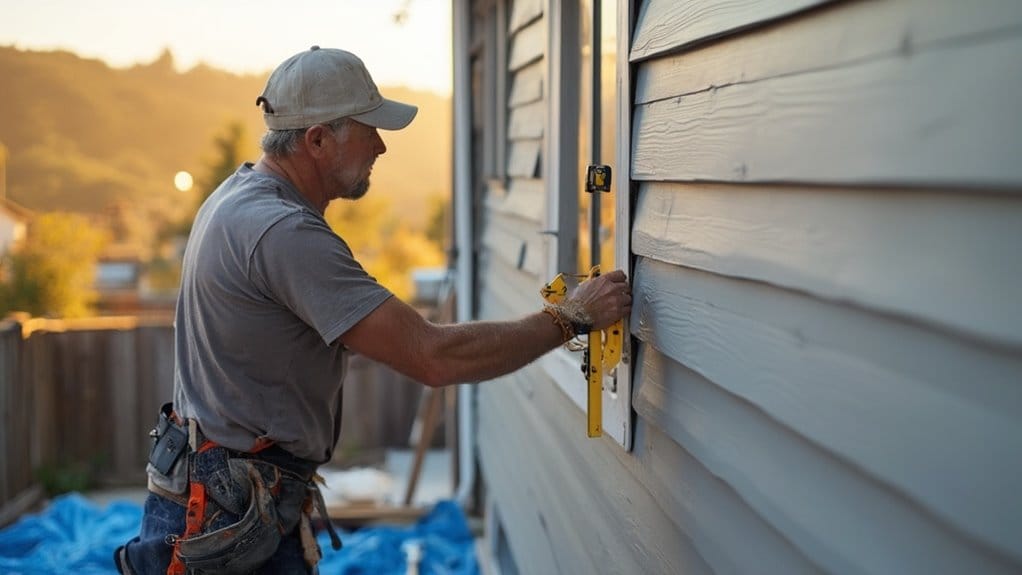
Your Walnut Creek home needs siding that can handle big temperature changes between cold winters and hot summers. Two good choices are fiber cement or engineered wood – both stand up well to harsh sun and rainy weather. Make sure you get professionals to put it up, as this keeps your warranty valid and meets all building rules. Take care of your siding by cleaning it properly each season and checking it regularly for problems. Understanding these basics helps you get the most out of your siding investment.
Key Takeaways
-
Choose fiber cement or engineered wood siding to withstand Walnut Creek�s hot summers and rainy winters effectively.
-
Schedule professional inspections twice yearly to detect structural issues, moisture problems, and potential siding failures early.
-
Install insulated siding materials to combat temperature extremes and reduce energy costs in Walnut Creek�s variable climate.
-
Clean siding thoroughly in spring using appropriate cleaning solutions, and clear gutters before fall rains begin.
-
Ensure proper installation by hiring licensed contractors who understand local building codes and offer warranty coverage.
Choosing the Right Siding Material for Walnut Creek�s Climate
Picking siding for your home in Walnut Creek means thinking about both the hot, dry summers and cool, rainy winters.
The local weather plays a big role in which materials will work best to keep your home protected from rain damage and changing temperatures.
For long-lasting siding, fiber cement and engineered wood work very well in Walnut Creek�s weather.
These materials won�t warp, rot, or get eaten by bugs, and they keep looking good as seasons change.
Vinyl siding costs less but can get weak and crack in extreme heat and cold.
Regular wood needs lots of upkeep to stop water damage.
Look for siding with sun and water protection built in, since Walnut Creek gets lots of sunlight and some rain throughout the year.
Pick something that looks good to you but can also stand up to the local weather.
Signs Your Home�s Siding Needs Replacement
Your home�s siding needs to be replaced if you spot any of these five key signs: bent or curved panels, big cracks, mold or fungus, loose or missing pieces, and damage to inside walls.
Check your siding often for these important warning signs that mean you need expert help:
|
Warning Sign |
What to Look For |
Action Needed |
|
Bad coloring |
Fading, streaks, dark patches |
Clean yearly; replace if it stays bad |
|
Water damage |
Bubbles, peeling, rotting |
Check right away; look at water barrier |
|
Overall strength |
Holes, bending, pulling apart |
Get expert check; replace all siding |
Watch out for peeling paint or bubbling areas – these usually mean water is getting in. If many panels look bad or your heating and cooling bills go up quickly, it�s time to call a siding expert.
Top Siding Options for Energy Efficiency
Picking the right siding can help cut your home�s energy bills and make it worth more when you sell. The best choice for saving energy is vinyl siding with foam backing, which helps keep heat in during winter and out during summer.
Fiber cement siding is strong and blocks heat well, especially with good insulation behind it.
If you want to help the environment, look at engineered wood siding. It�s made from old wood mixed with special glue, making it both earth-friendly and good at keeping your home warm or cool.
Metal siding with built-in insulation is another smart pick – it bounces heat away and has an extra layer to stop temperature changes.
When you shop for siding, check how well each type blocks heat from moving through walls and how it saves energy over time.
Professional Installation vs.�DIY: What You Need to Know
While doing siding yourself can save money at first, you�ll need special tools, careful measurements, and a good understanding of building rules to do it right. Skilled workers have spent years learning how to install siding and can handle problems that often trip up beginners.
|
Professional Installation |
DIY Installation |
|
Warranty Coverage |
No Warranty |
|
Expert Tools & Equipment |
Tool Investment Needed |
|
Code Compliance Guaranteed |
Code Research Required |
|
Time-Efficient Completion |
Extended Timeline |
|
Insurance Protection |
Personal Liability |
Keep in mind that professionals know how to properly protect against water damage, install metal strips around edges, and ensure good airflow. They can also spot hidden damage that could hurt your siding�s performance. For big projects or when using high-quality materials, hiring professionals usually saves money over time.
Seasonal Maintenance Tips for Long-Lasting Siding
Taking good care of your house siding helps it look nice and last longer in every season. Check your siding often for any breaks, bends, or loose parts, especially after bad weather.
When spring comes, clean your siding with a soft brush and the right cleaning mix to get rid of winter dirt. In summer, look for damage from the sun and bugs, and cut back any plants that might scratch the siding.
During fall, clean out gutters and pipes to stop water damage, and in winter, remove ice right away when you see it. Keep track of what you find during each check-up, and write down what needs to be fixed or what needs an expert�s help.
Fix small problems quickly to avoid big repair bills and keep your siding working well all year round.
Color Selection and Property Value Impact
Your house color affects how much it�s worth and how good it looks from the street. When picking a color for your house, think about how different colors make people feel and what buyers might like. Safe colors like tan, gray, and off-white usually help homes sell for more money, while bright colors might turn some buyers away.
Look at what colors other houses in your area use. Your house should fit in with nearby homes but can still look special in a nice way.
Your house style matters too – old Victorian houses look good in bright colors, while Craftsman houses work better with natural, earthy colors. The local weather is important too. Dark colors fade faster in sunny places, and they show dirt more in areas with lots of rain.
The colors you pick for the edges and small parts of your house can make the main color look even better.
Understanding Siding Warranties and Protection Plans
After picking your siding color, it�s important to protect your investment with warranties and protection plans from the maker. You�ll want to know exactly what�s covered, including problems with materials, worker costs, and if you can pass the warranty to new owners.
Most companies offer different levels of coverage, from basic 25-year plans to full lifetime protection.
Take time to read your warranty papers to spot what�s not covered and what upkeep you need to do. To make a claim, you usually need your receipt, pictures of the problems, and an expert�s report.
Sign up for your warranty right after the siding goes up, and keep good records of all maintenance. Some plans give extra coverage like protection from hail damage or promises about color staying bright.
Keep in mind that having certified workers install your siding is often needed to keep your full warranty protection.
Common Siding Problems in Northern California
The weather in Northern California causes several problems for house siding. Along the coast near San Francisco, heavy fog and rain can rot wood siding and break down cement boards. Bugs like termites and carpenter ants often damage siding in both city and suburban homes.
In warmer inland areas like Walnut Creek, strong sunlight can fade siding colors and warp materials. Hot and cold weather changes make siding expand and shrink, which can create gaps.
Water often leaks through poorly installed metal strips around windows and doors, leading to hidden wood rot. To avoid big repair bills, homeowners should check their siding regularly for these local problems.
Cost Comparison of Popular Siding Materials
Comparing common siding materials shows that vinyl costs $3-7 per square foot when installed, fiber cement costs $5-13, and real wood costs $8-14.
Many people pick vinyl because it needs little care and lasts 20-30 years. Wood can last over 100 years if well cared for, but you must paint and seal it often.
Fiber cement sits in the middle price range but can last over 50 years with little work needed.
Aluminum costs $4-8 per square foot and needs little care, but it can get dented easily.
Regular stucco keeps homes warm and cool well at $6-9 per square foot, but experts must put it in, and it might crack in bad weather.
Look at your local weather and how much you can spend when picking your siding.
Best Practices for Cleaning and Preserving Your Siding
Keeping your home�s siding clean helps it look good and last longer, no matter what it�s made of.
Clean vinyl siding with a soft brush and mild soap, use oxygen bleach for wood siding, and pick special cleaners for fiber cement. Taking good care of your siding helps avoid big repair bills later.
-
Use a pressure washer on low power (1,500 PSI or less), start at the top and work down, holding the sprayer at a 45-degree angle.
-
Clean off any mold or mildew right away using a mix of 70% water and 30% bleach, then rinse well with water.
-
Once a year, check for and fix gaps around windows, doors, and corners, putting in new caulk where needed to keep water out.
Before cleaning the whole house, try your cleaning mix on a small hidden spot to make sure it won�t harm the siding.
Frequently Asked Questions
How Long Does a Typical Siding Installation Project Take to Complete?
The time needed to put up siding on your house depends on how big it is and what type of siding you pick. A regular house around 2,000 square feet usually takes between 7 and 14 work days to finish.
Can Siding Be Installed Over Existing Siding Materials?
Yes, you can put new siding on top of old siding, but adding layers can cause some problems. Before you start, make sure to check if water can drain properly, if air can flow well behind the siding, and if your house�s walls are strong enough to handle the extra weight.
What Permits Are Required for Siding Installation in Walnut Creek?
To install siding in Walnut Creek, you need to get a building permit from the city�s Planning Division. You must turn in your project plans, list what materials you�ll use, and provide details about your contractor. The city will check these items before giving you the go-ahead to start work.
Do You Offer Financing Options for Siding Replacement Projects?
Yes, we work with several lenders to help you pay for your siding project. You can pick from low-interest loans or monthly payment plans that match what you can afford. We�ll walk you through the choices and find a way to pay that works for your needs.
Will New Siding Installation Affect My Home�s Insurance Premiums?
Installing new siding might change what you pay for home insurance, and most people end up paying less. This happens because new siding makes your house stronger and better at handling bad weather. Check with your insurance company to see how much money you could save after putting up new siding.
Conclusion
When you�re investing in new siding for your Walnut Creek home, it�s essential to factor in our region�s specific climate challenges, material durability, and long-term maintenance requirements. GS Builders Group recommends selecting weather-resistant materials, adhering to manufacturer-specified installation protocols, and implementing a regular maintenance schedule. Remember to document all warranty information and schedule professional inspections every 2-3 years with GS Builders Group to guarantee peak performance and longevity.